Durable Cable Tag Options for Secure Identification
March 2, 2026
Introduction
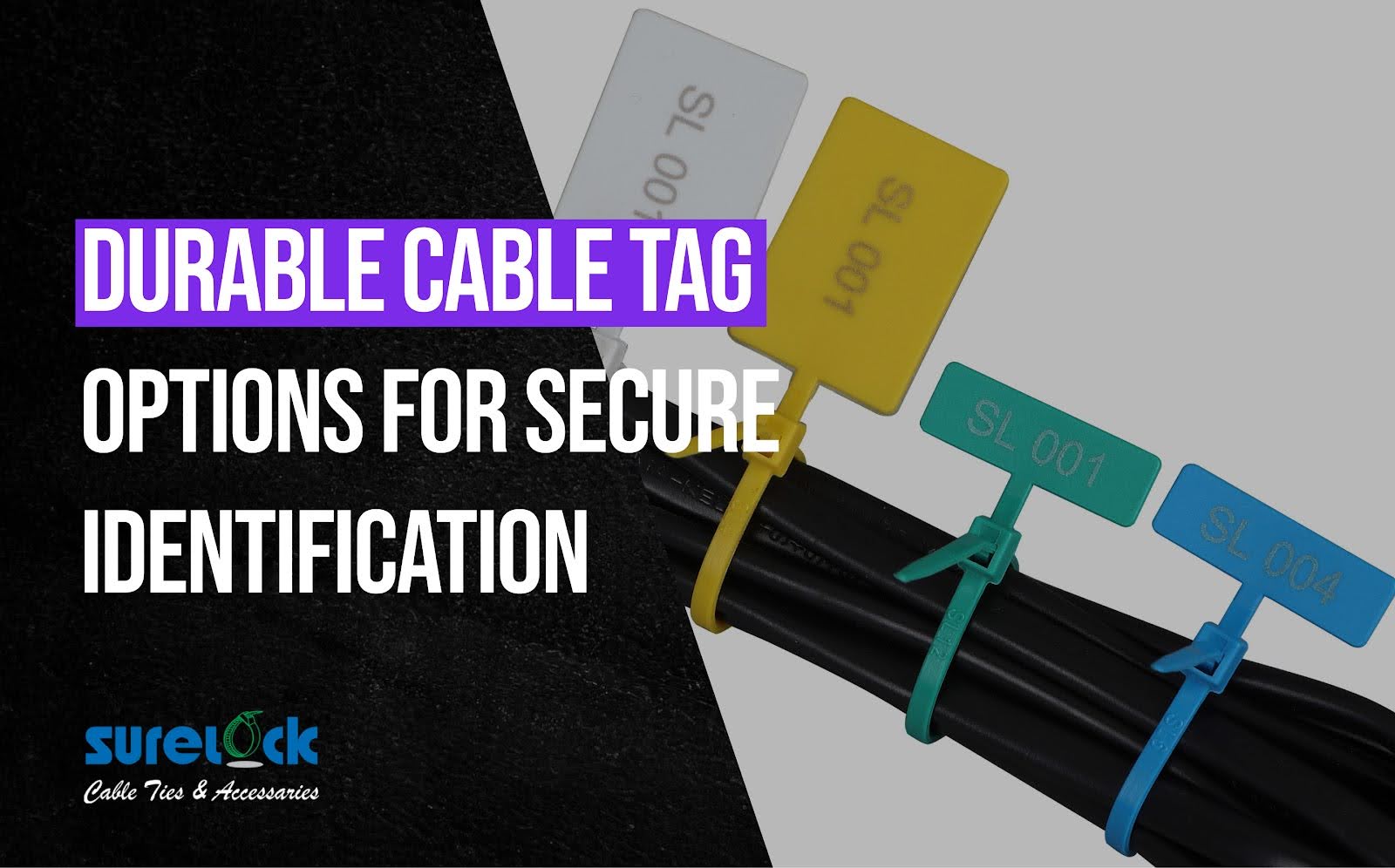
If you’ve ever traced a bundle across a rack, panel, or outdoor run, you know the cost of guesswork. The right cable tag solution pairs a readable ID area with a fastening method and material that won’t quit—through heat, vibration, UV, and daily handling. Below is a comprehensive guide to durable identification options mapped directly to Surelock’s portfolio, so you can deploy IDs that stay legible and in place for years.
Why does durability matter?
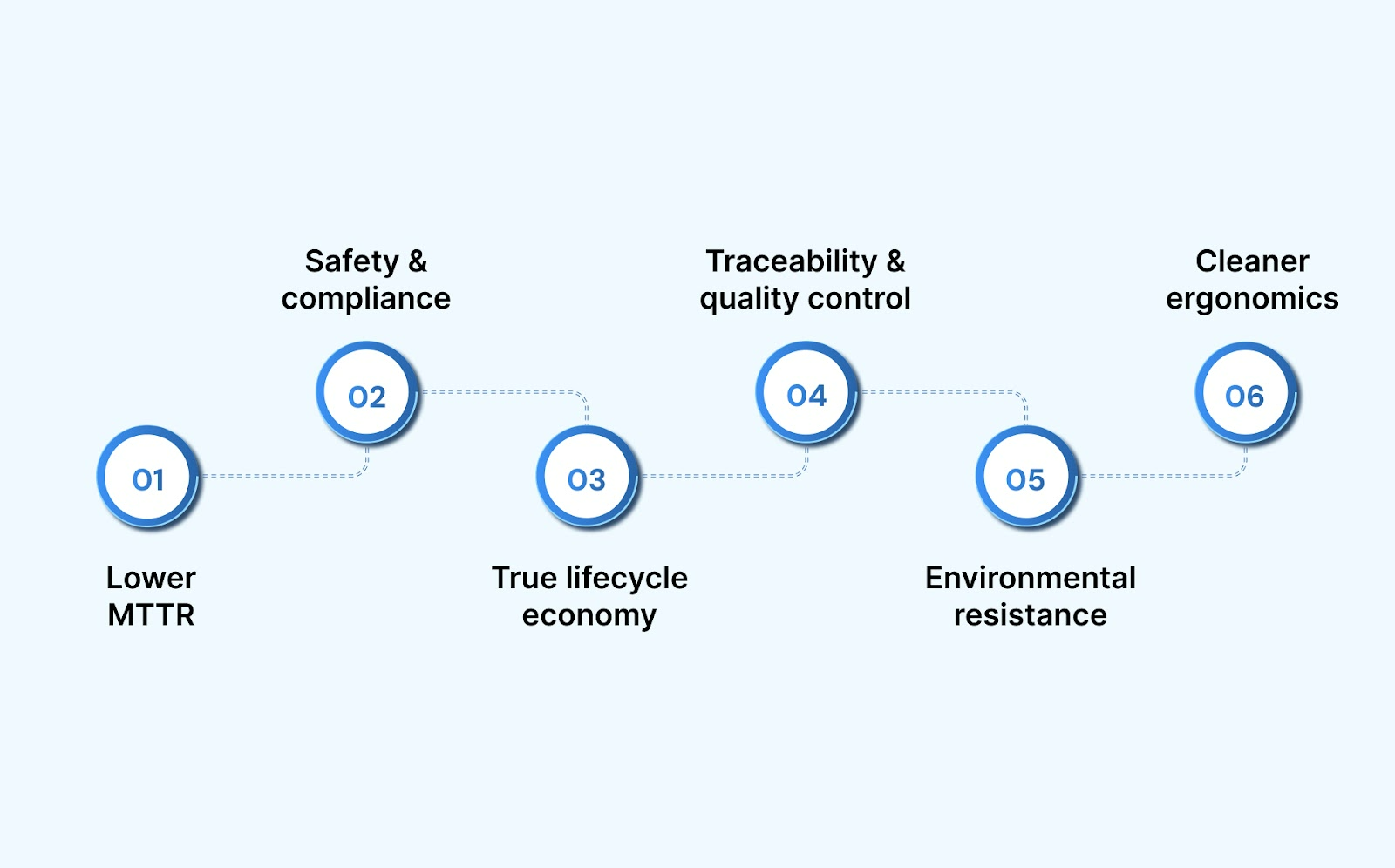
When identification fails, everything comes to a halt. Durable cable tag systems protect legibility and attachment strength across the full life of the asset, which pays off in several ways:
- Lower MTTR (mean time to repair): Clear, intact IDs shorten fault isolation and speed MACs (moves/adds/changes). Even a 5–10 minute save per task compounds across a site.
- Safety & compliance: Readable IDs reduce guesswork around live circuits, voltages, and isolation points—key for LOTO, audits, and SOP adherence.
- True lifecycle economy: Cheap tags that fade, snap, or fall off get replaced repeatedly. A durable tag, combined with the right tie (nylon indoors; stainless steel or coated steel outdoors in chemical zones), reduces rework, truck rolls, and downtime.
- Traceability & quality control: Stable IDs keep work orders, test results, and asset histories linked to the right conductor—critical for regulated environments (food/pharma), utilities, and data centers.
- Environmental resistance: UV, heat/cold cycling, vibration, wash-downs, oils/chemicals, and salt spray attack tags differently. Material-matched solutions prevent yellowing, embrittlement, ink lift, and lock slippage.
- Cleaner ergonomics: Proper tensioning and flush cuts prevent sharp tails and snag hazards, improving technician safety and professionalism.
Typical failure modes—and how to prevent them
- Faded print → use a rigid write-on panel or apply durable printed labels; keep contrast high.
- Tag rotation or hidden IDs → choose Inside Vertical or Outside Tag Ties to keep legends visible.
- Tie creep/slip in vibration → spec metal-tooth or stainless lock designs.
- Breakage in harsh zones → step up to SS304/SS316 ties; consider coated steel for touch safety.
- Painful rework → use releasable or reusable ties where changes are frequent.
Option 1: One-piece Tag Ties (ID panel integrated into the head)
If speed and consistency matter, Tag Ties bundle and identify in a single step. Surelock offers a standard Tag Tie, plus an Inside Vertical Tag Tie (which elevates the ID for crowded harnesses) and an Outside Tag Tie (which keeps the tag readable from the outer radius). These are Nylon-66, typically rated −40 °C to +85 °C, with flame class and compliance markings on select models (e.g., UL 94V-2, CE, RoHS on Outside Tag Tie). Laser or pen marking is supported.
Where they shine: Harness builds, telecom wiring, appliances, and pharma/chemical equipment—anywhere one-piece speed reduces takt time and placement variability.
Option 3: Color-coded ties
When a color scheme communicates all you need—phase marking, network class, maintenance bands. Colored Cable Ties deliver instant, durable visual IDs (red/blue/green/yellow). Because the color is integral to the tie, there’s no printed layer to rub off. Multi-color assortments are useful for 5S pilots and temporary zoning.
Option 4: Stainless-steel & coated steel systems (for heat, UV, and chemicals)
When nylon won’t survive the environment, step up to stainless steel. Surelock’s stainless steel range includes Multi-Lock Steel Ties (coated), featuring strong, multi-position locking capabilities. These ties are coated with nylon or polyester, which improves handling and provides tactile safety. Additionally, Reusable Steel Ties (coated) are available when you need to reopen and re-route. Pair with SS 316 embossable tags to create fully metallic, permanent IDs for wash-down, marine, or chemical exposure.
Best fit: Oil & gas, marine, outdoor solar BOS, corrosive plants
Why it lasts: Corrosion-resistant alloys (SS304/SS316), robust locks, and coatings that reduce edge sharpness and galvanic concerns.
Tooling: Use the STT-2 tensioning/cutting tool for installer-controlled tension and flush cut-offs; it’s designed for multi-lock, ball-lock, and easy-lock stainless ties.
Are you unsure whether you need SS304, SS316, or a coated option? Ask Surelock for a corrosion-class match based on your location and media exposure.
Option 6: Metal-tooth ties
High vibration or thermal cycling can cause slippage with standard heads. Metal-tooth ties deliver higher bite and long-term lock retention. Use them as the mechanical backbone with your preferred tag media (nylon tag panels in controlled areas; metal tags in harsh zones).
Choose the Right Cable Tag for the Job
- General panels & racks: Nylon Cable Identification Tag; standard nylon ties
Goal: clear, durable text area without over-engineering.
- Assembly lines/harness builds: Tag Tie (standard / inside-vertical / outside)
Goal: one-piece speed + consistent placement and readability.
- Harsh & outdoor: Stainless steel ties (SS316 where salt/chemicals are present) + embossable steel tags
Goal: survive UV, heat, chemicals, and wash-down.
- Frequent changes: Releasable or coated reusable steel ties + replaceable labels
Goal: minimize cut-and-replace waste during MACs.
- Color-only programs: Colored Cable Ties (R/B/G/Y)
Goal: instantaneous visual classification at distance.
- Vibration & thermal cycling: Metal-tooth ties + compatible tag media
Goal: lock integrity under shock and cycling.
How to Install Cable Tags for Maximum Durability?
A rugged cable tag starts with smart installation, not just tough materials. The goal is simple: keep IDs readable, secure, and safe to handle through heat, UV, vibration, and maintenance cycles. Below you’ll find the essentials—choosing the right tag and tie, placing it for visibility, setting correct tension, and making clean, flush cuts—so your identification lasts as long as the cable itself.
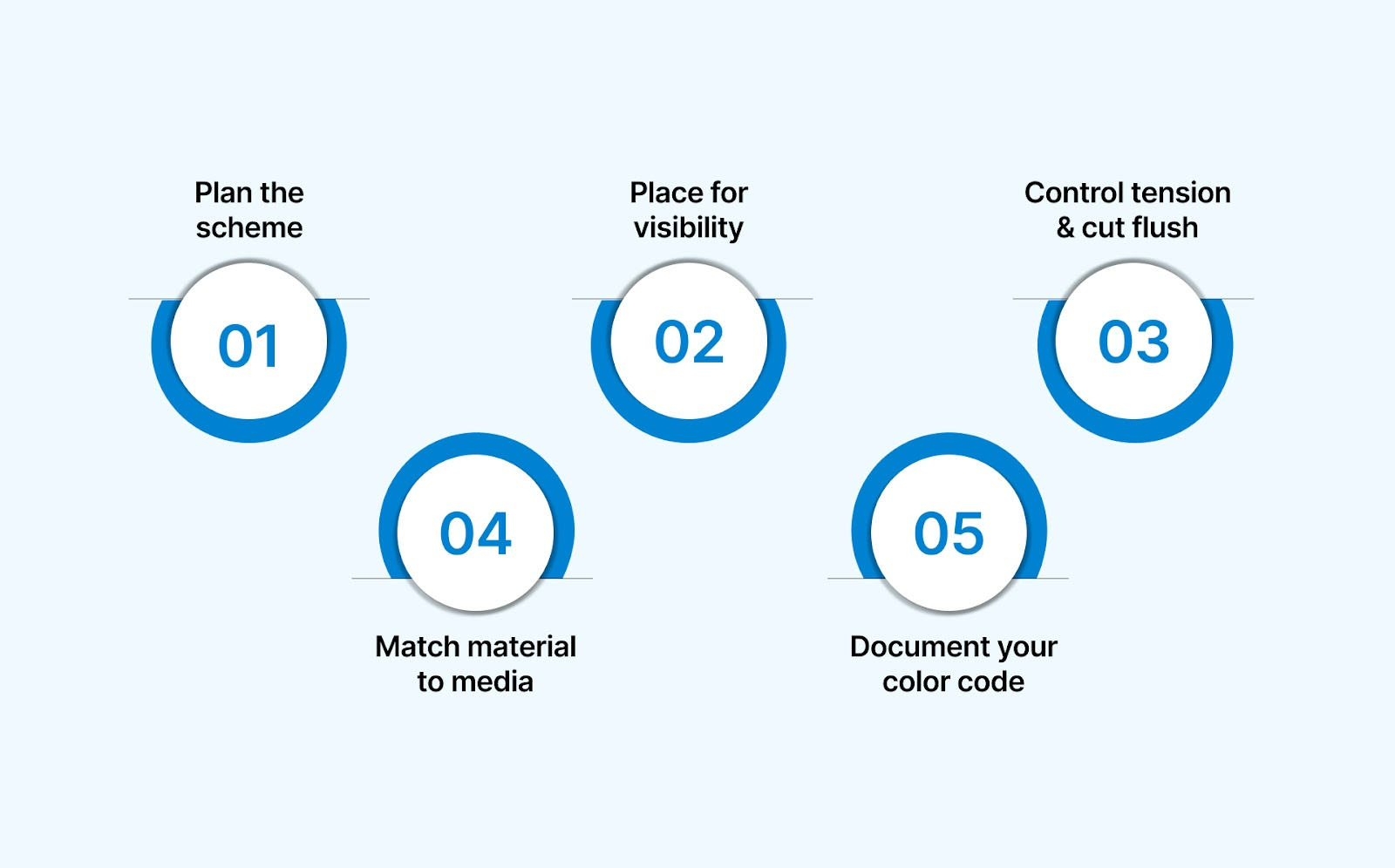
- Plan the scheme. Decide what your cable tag must carry (panel/port/circuit, work order, or asset ID). Keep the legend consistent across sites.
- Place for visibility. Use Inside Vertical Tag Ties to lift the tag above dense harnesses; choose Outside Tag Ties where side reading is more convenient for technicians.
- Control tension & cut flush. Stainless steel tie installs should use STT-2 for controlled tension and automatic flush cut; this prevents over-tightening and eliminates sharp tails.
- Match material to media. Indoors: nylon. High heat/chemicals/salt: stainless steel (preferably SS316) with a coating, for scenarios where touching the cables is a safety concern.
- Document your color code. If color is the tag, publish the code in SOPs and training.
Want a site-ready SOP template (legend, colors, torque/tension, inspection)? Request a Surelock deployment checklist.
Industry snapshots: what works where
- Telecom towers & BTS: UV-resistant nylon and Tag Ties for feeder/antenna routing; stainless steel ties + embossable tags for outdoor terminations exposed to weather.
- Marine & offshore: SS316 ties and embossable tags resist salt spray; pair with STT-series tools for safe, consistent cuts.
- Solar & wind: UV-resistant cable ties, Inside/Outside Tag Ties for readable IDs in nacelles and arrays; STT-2 recommended for stainless runs.
- Automotive harnessing: Push-mount fir-tree ties anchor bundles to panels; inside vertical tag ties keep IDs visible in tight bays.
Conclusion
Durable identification is a system: a readable cable tag surface plus a tie engineered for the environment. With Surelock’s lineup—Nylon Cable Identification Tags, Tag Tie variants (inside vertical / outside), Colored Cable Ties, Metal-Tooth and Heavy-Duty/Releasable options, stainless and coated steel ties, embossable SS316 tags, and STT-series tools—you can standardize on rugged, readable IDs from panel to plant to offshore.
Ready to lock in a site-wide ID standard? Contact Surelock for a tailored kit (including tags, ties, and tools) tailored to your environment and industry.
FAQs
Q1: Cable tag vs cable label - what’s the difference?
A cable tag provides a rigid or semi-rigid ID panel secured with a tie (e.g., Tag Tie or Nylon Identification Tag), whereas a label typically wraps around the conductor. Tag Ties combine bundling + ID in one molded piece to simplify assembly.
Q2: What temperature or environmental limits should I watch?
Nylon tag solutions typically operate −40 °C to +85 °C. For heat, chemicals, or marine exposure, consider upgrading to stainless steel (SS316) and explore coated options for enhanced touch safety.
Q3: How do I get clean, safe cut-offs on metal ties?
Use STT-2—it provides installer-controlled tension and automatic flush cut suitable for multi-lock/ball-lock/easy-lock stainless ties.
Q4: Can I make permanent, all-metal IDs?
Yes—pair stainless ties with SS316 embossable tags for harsh environments that demand fully metallic identifiers.